
Water as Infrastructure: Designing sponge cities for resilience
Urban Climate Series Part 3 of 4
Malmö: Canals and ponds manage stormwater in a residential neighborhood (Augustenborg)
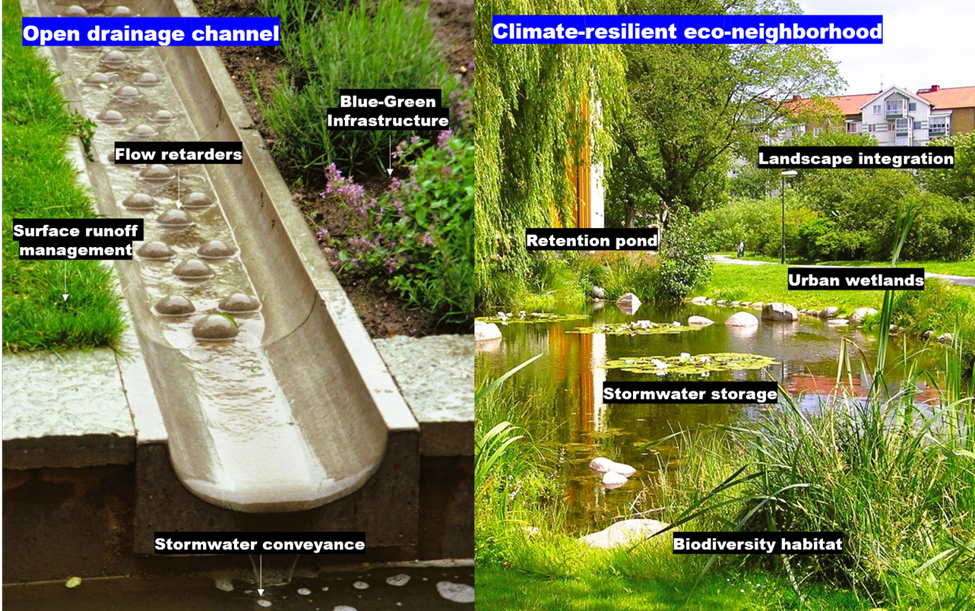
Traditionally, stormwater in cities was considered waste to be evacuated quickly. Malmö broke with that scheme by treating water as visible and multifunctional urban infrastructure. The emblematic case is Augustenborg, a social housing neighborhood from the mid-20th century that, by the late 1990s, suffered from recurrent flooding due to sewer overload.
Between 1998 and 2002, Malmö implemented in Augustenborg a pioneering open-air Sustainable Urban Drainage System (SUDS). Six kilometers of canals and ten interconnected retention ponds were built, integrated into squares and courtyards of the neighborhood. Now, 100% of stormwater from roofs, streets, and parking lots is collected in trenches, vegetated swales, ponds, and local wetlands, entering the conventional sewer network only as overflow during very exceptional rains.
This blue-green network slows and retains runoff, avoiding peak discharges. Green roofs were also installed on all new constructions after 1998, and 11,000 m² of retrofitted vegetated roofs were added on existing buildings, increasing retention capacity and evapotranspiration
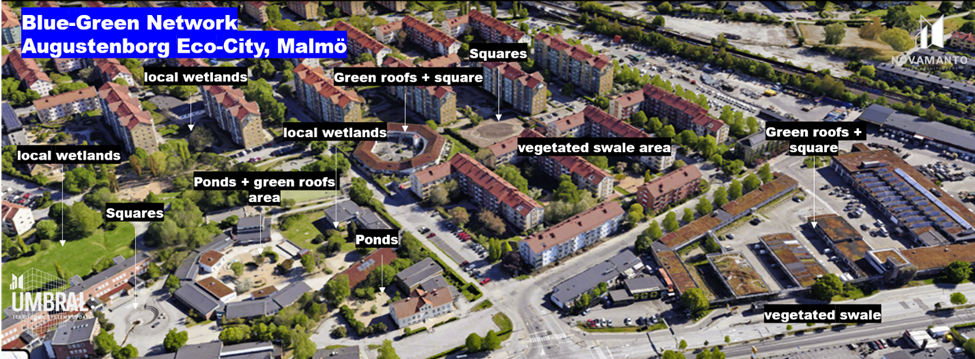
This success demonstrates how water can be managed within the urban fabric through green infrastructures, also providing aesthetic and recreational value. Malmö extended this approach to other developments: in Bo01 (Western Harbour), stormwater drainage was also resolved superficially, with canals carrying water directly to the Øresund Strait, vegetated edges filtering and evaporating part of the flow, and small ponds and wetlands scattered to irrigate gardens.
Far from being mere hydraulic works, these elements were designed as linear parks and water mirrors that beautify the landscape. Malmö’s experience shows that managing water in situ -retaining it, filtering it, and giving it space- enhances resilience and improves the city: every street or square can become “operational water infrastructure.”
Copenhagen: A cloudburst event marked a turning point
An extreme event marked a turning point in Copenhagen: in July 2011 a torrential downpour collapsed the sewer system and caused damages of more than 6 billion Danish kroner. Far from responding with traditional solutions (simply expanding pipes), the city opted for an innovative and holistic approach, embodied in the Cloudburst Management Plan 2012.
This plan, with an estimated investment of 1.5 billion euros over 20 years, contemplates around 300 surface projects focused on stormwater retention and drainage. Instead of hiding water, Copenhagen integrates it into the city through multi-purpose infrastructures.
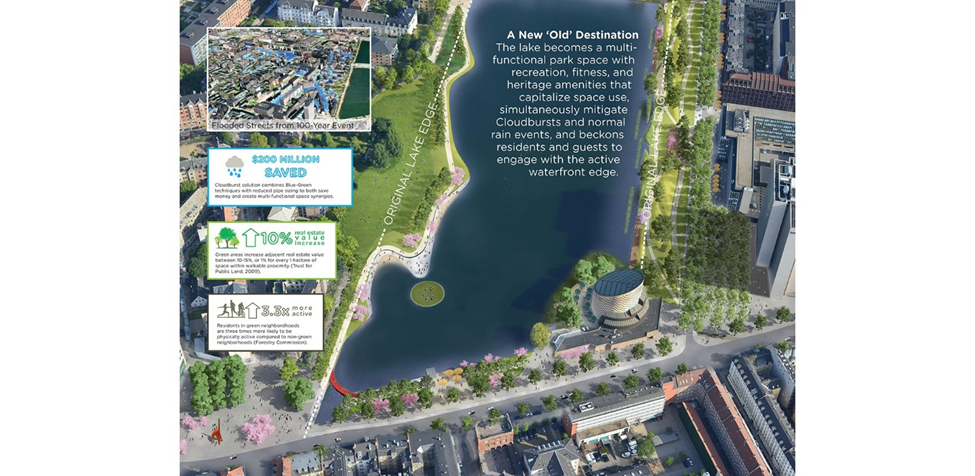
𝗙𝗼𝗿 𝗲𝘅𝗮𝗺𝗽𝗹𝗲, 𝗮 𝗻𝗲𝘁𝘄𝗼𝗿𝗸 𝗼𝗳 “𝗰𝗹𝗼𝘂𝗱𝗯𝘂𝗿𝘀𝘁 𝗯𝗼𝘂𝗹𝗲𝘃𝗮𝗿𝗱𝘀” 𝗮𝗻𝗱 𝘀𝘁𝗼𝗿𝗺𝘄𝗮𝘁𝗲𝗿 𝗽𝗶𝗽𝗲𝘀 𝘄𝗶𝗹𝗹 𝗱𝗶𝗿𝗲𝗰𝘁 𝗲𝘅𝗰𝗲𝘀𝘀 𝘄𝗮𝘁𝗲𝗿 𝘁𝗼𝘄𝗮𝗿𝗱 𝘂𝗿𝗯𝗮𝗻 𝗹𝗮𝗸𝗲𝘀 𝗮𝗻𝗱 𝘁𝗵𝗲 𝗵𝗮𝗿𝗯𝗼𝗿. 𝗗𝗲𝘁𝗲𝗻𝘁𝗶𝗼𝗻 𝗿𝗼𝗮𝗱𝘀 (𝘀𝘁𝗿𝗲𝗲𝘁𝘀 𝗱𝗲𝘀𝗶𝗴𝗻𝗲𝗱 𝘁𝗼 𝘁𝗲𝗺𝗽𝗼𝗿𝗮𝗿𝗶𝗹𝘆 𝘀𝘁𝗼𝗿𝗲 𝘄𝗮𝘁𝗲𝗿) 𝗮𝗻𝗱 𝗿𝗲𝘁𝗲𝗻𝘁𝗶𝗼𝗻 𝗮𝗿𝗲𝗮𝘀 𝗶𝗻 𝗹𝗼𝘄 𝗽𝗼𝗶𝗻𝘁𝘀—𝗽𝗮𝗿𝗸𝘀 𝘁𝗵𝗮𝘁 𝗼𝗻 𝗱𝗿𝘆 𝗱𝗮𝘆𝘀 𝘀𝗲𝗿𝘃𝗲 𝗮𝘀 𝗿𝗲𝗰𝗿𝗲𝗮𝘁𝗶𝗼𝗻𝗮𝗹 𝘀𝗽𝗮𝗰𝗲𝘀, 𝗯𝘂𝘁 𝗱𝘂𝗿𝗶𝗻𝗴 𝗮 𝘀𝘁𝗼𝗿𝗺 𝗰𝗮𝗻 𝗯𝗲𝗰𝗼𝗺𝗲 𝘁𝗲𝗺𝗽𝗼𝗿𝗮𝗿𝘆 𝗹𝗮𝗸𝗲𝘀—𝗮𝗿𝗲 𝗮𝗹𝘀𝗼 𝗽𝗮𝗿𝘁 𝗼𝗳 𝘁𝗵𝗲 𝗽𝗹𝗮𝗻.
An exemplary case already built is Tåsinge Plads, the city’s first climate-resilient square in the Østerbro neighborhood. This space, previously a gray dog run, was redesigned with green depressions and underground tanks capable of storing rainwater from the entire neighborhood. The adjacent streets were sloped to channel water toward the square, where asphalt gave way to grass, flowers, and trees. After the intervention, Tåsinge Plads not only protects against local flooding but has become a community attraction: a green oasis where there was none before. This project raised awareness among residents that “rain, rather than an obstacle, is an essential resource and a gift for the city.”
Similarly, Copenhagen has installed permeable pavement with rain gardens in former parking lots, as a complementary measure to infiltrate water on-site.
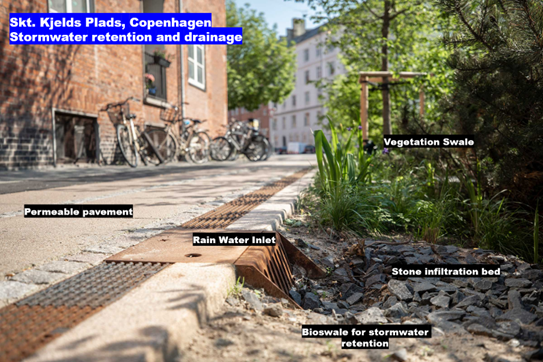
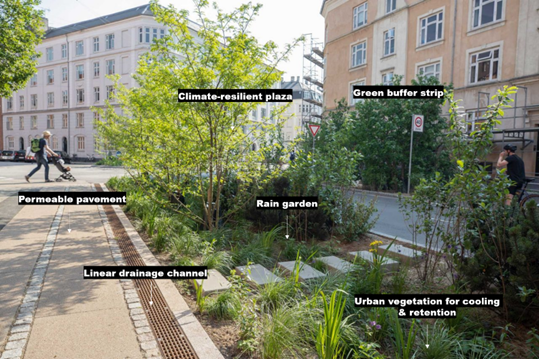
The underlying philosophy is to treat rainwater as part of urban furniture: to make it visible, playful, and safe. It is noteworthy that the Cloudburst Plan combined green solutions with traditional sewer upgrades where necessary, after demonstrating through cost–benefit analysis that this hybrid solution (blue-green + grey) generated a positive socioeconomic return, unlike expanding sewers alone (which would have resulted in a “negative social gain” due to persistent residual damage).
The initiative also involved metropolitan coordination, since water does not respect municipal boundaries. In sum, Copenhagen’s lesson is to integrate the water cycle into urban design: from streets, squares, and parks converted into operational infrastructures, to management planned by urban catchments. This inspires any city to rethink public spaces as key elements to face extreme rainfall, rather than relying solely on invisible underground pipes.
𝗧𝗵𝗲𝘀𝗲 𝗲𝘅𝗮𝗺𝗽𝗹𝗲𝘀 𝘂𝗻𝗱𝗲𝗿𝘀𝗰𝗼𝗿𝗲 𝘁𝗵𝗮𝘁 𝘄𝗮𝘁𝗲𝗿 𝗶𝘀 𝗻𝗼𝘁 𝗼𝗻𝗹𝘆 𝗮 𝗺𝗮𝘁𝘁𝗲𝗿 𝗼𝗳 𝘂𝗿𝗯𝗮𝗻 𝗿𝗲𝘀𝗶𝗹𝗶𝗲𝗻𝗰𝗲 𝗯𝘂𝘁 𝗮𝗹𝘀𝗼 𝗮 𝗱𝗿𝗶𝘃𝗲𝗿 𝗼𝗳 𝘁𝗲𝗿𝗿𝗶𝘁𝗼𝗿𝗶𝗮𝗹 𝗲𝗻𝗲𝗿𝗴𝘆 𝘁𝗿𝗮𝗻𝘀𝗶𝘁𝗶𝗼𝗻𝘀. 𝗕𝘆 𝗶𝗻𝘁𝗲𝗴𝗿𝗮𝘁𝗶𝗻𝗴 𝗵𝘆𝗱𝗿𝗼𝗹𝗼𝗴𝗶𝗰𝗮𝗹 𝗰𝘆𝗰𝗹𝗲𝘀 𝗶𝗻𝘁𝗼 𝗿𝗲𝗴𝗶𝗼𝗻𝗮𝗹 𝗲𝗻𝗲𝗿𝗴𝘆 𝘀𝘆𝘀𝘁𝗲𝗺𝘀, 𝗠𝗮𝗹𝗺ö 𝗮𝗻𝗱 𝗖𝗼𝗽𝗲𝗻𝗵𝗮𝗴𝗲𝗻 𝗲𝗺𝗯𝗼𝗱𝘆 𝗮 𝗺𝗲𝘁𝗮𝗯𝗼𝗹𝗶𝗰 𝗮𝗽𝗽𝗿𝗼𝗮𝗰𝗵 𝘁𝗵𝗮𝘁 𝗰𝗼𝗻𝗻𝗲𝗰𝘁𝘀 𝗰𝗶𝘁𝗶𝗲𝘀, 𝗹𝗮𝗻𝗱𝘀𝗰𝗮𝗽𝗲𝘀, 𝗮𝗻𝗱 𝗶𝗻𝗳𝗿𝗮𝘀𝘁𝗿𝘂𝗰𝘁𝘂𝗿𝗲𝘀 𝗶𝗻𝘁𝗼 𝗮 𝗿𝗲𝘀𝗶𝗹𝗶𝗲𝗻𝘁 𝗮𝗻𝗱 𝗰𝗶𝗿𝗰𝘂𝗹𝗮𝗿 𝘄𝗵𝗼𝗹𝗲.
Water, Energy and Territorial Metabolism
The relationship between water and energy extends beyond the urban scale, revealing its role in territorial metabolism. Both Malmö and Copenhagen are embedded in broader regional strategies where water connects to renewable energy production and climate adaptation.
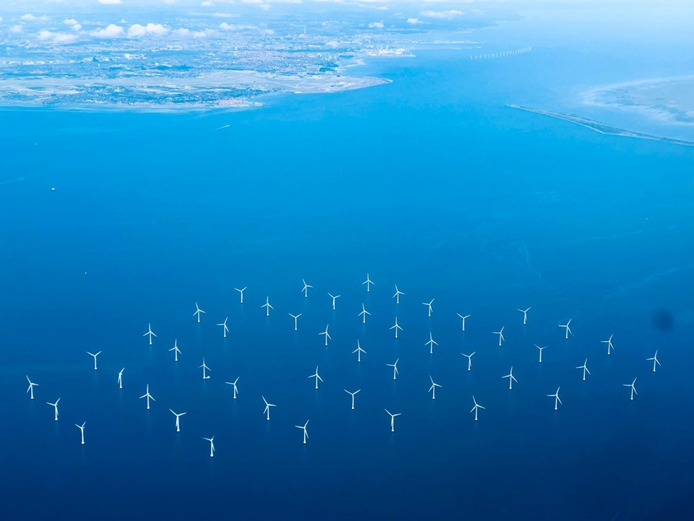
- Offshore wind energy in the Baltic Sea: Copenhagen’s coastal geography has enabled the development of large offshore wind farms, visible from the city itself. These infrastructures not only harness marine winds but also operate in synergy with water systems, showing how the sea becomes both a source of risk (rising levels, storm surges) and an essential energy resource.
- Thermal energy from evaporation: In Sweden, research is advancing on how evaporation processes —captured through lakes, wetlands, and even urban water surfaces—can be integrated into district heating and cooling networks. This demonstrates how water contributes directly to the city’s energy metabolism, transforming what was once considered a byproduct into a resource for thermal regulation.
- Circular metabolism: At the territorial scale, water closes loops that go beyond the urban boundary: wastewater treatment plants not only recover water but also generate biogas from sludge; urban runoff recharges aquifers or is directed to peri-urban agriculture; and blue-green infrastructures link climate adaptation to energy efficiency.
𝗖𝗼𝗻𝗰𝗹𝘂𝘀𝗶𝗼𝗻𝘀
🌊 𝗩𝗶𝘀𝗶𝗯𝗹𝗲 𝗮𝗻𝗱 𝗺𝘂𝗹𝘁𝗶𝗳𝘂𝗻𝗰𝘁𝗶𝗼𝗻𝗮𝗹 𝗶𝗻𝗳𝗿𝗮𝘀𝘁𝗿𝘂𝗰𝘁𝘂𝗿𝗲 → 𝗰𝗮𝗻𝗮𝗹𝘀, 𝗽𝗼𝗻𝗱𝘀, 𝗮𝗻𝗱 𝗰𝗹𝗶𝗺𝗮𝘁𝗲 𝘀𝗾𝘂𝗮𝗿𝗲𝘀 𝗮𝗿𝗲 𝗻𝗼𝘁 𝗷𝘂𝘀𝘁 𝗵𝘆𝗱𝗿𝗮𝘂𝗹𝗶𝗰 𝘀𝗼𝗹𝘂𝘁𝗶𝗼𝗻𝘀, 𝗯𝘂𝘁 𝘀𝗼𝗰𝗶𝗮𝗹, 𝗿𝗲𝗰𝗿𝗲𝗮𝘁𝗶𝗼𝗻𝗮𝗹, 𝗮𝗻𝗱 𝗲𝗰𝗼𝗹𝗼𝗴𝗶𝗰𝗮𝗹 𝘀𝗽𝗮𝗰𝗲𝘀 𝘁𝗵𝗮𝘁 𝘀𝘁𝗿𝗲𝗻𝗴𝘁𝗵𝗲𝗻 𝗰𝗼𝗺𝗺𝘂𝗻𝗶𝘁𝘆 𝗰𝗼𝗵𝗲𝘀𝗶𝗼𝗻.
♻️ 𝗖𝗹𝗼𝘀𝗶𝗻𝗴 𝗺𝗲𝘁𝗮𝗯𝗼𝗹𝗶𝗰 𝗰𝘆𝗰𝗹𝗲𝘀 → 𝗽𝗿𝗼𝗷𝗲𝗰𝘁𝘀 𝗹𝗶𝗸𝗲 𝗔𝘂𝗴𝘂𝘀𝘁𝗲𝗻𝗯𝗼𝗿𝗴 𝗼𝗿 𝗕𝗼𝟎𝟏 𝗿𝗲𝘁𝗮𝗶𝗻, 𝗶𝗻𝗳𝗶𝗹𝘁𝗿𝗮𝘁𝗲, 𝗮𝗻𝗱 𝗲𝘃𝗮𝗽𝗼𝗿𝗮𝘁𝗲 𝘀𝘁𝗼𝗿𝗺𝘄𝗮𝘁𝗲𝗿 𝗹𝗼𝗰𝗮𝗹𝗹𝘆, 𝗿𝗲𝗱𝘂𝗰𝗶𝗻𝗴 𝗽𝗿𝗲𝘀𝘀𝘂𝗿𝗲 𝗼𝗻 𝘁𝗿𝗮𝗱𝗶𝘁𝗶𝗼𝗻𝗮𝗹 𝗻𝗲𝘁𝘄𝗼𝗿𝗸𝘀 𝗮𝗻𝗱 𝗴𝗲𝗻𝗲𝗿𝗮𝘁𝗶𝗻𝗴 𝗶𝗻𝗱𝗶𝗿𝗲𝗰𝘁 𝗲𝗻𝗲𝗿𝗴𝘆 𝗯𝗲𝗻𝗲𝗳𝗶𝘁𝘀.
⚡ 𝗪𝗮𝘁𝗲𝗿 𝗮𝗻𝗱 𝗲𝗻𝗲𝗿𝗴𝘆 → 𝗶𝗻 𝗖𝗼𝗽𝗲𝗻𝗵𝗮𝗴𝗲𝗻, 𝘄𝗮𝘀𝘁𝗲𝘄𝗮𝘁𝗲𝗿 𝘁𝗿𝗲𝗮𝘁𝗺𝗲𝗻𝘁 𝗽𝗹𝗮𝗻𝘁𝘀 𝗿𝗲𝗰𝗼𝘃𝗲𝗿 𝗻𝘂𝘁𝗿𝗶𝗲𝗻𝘁𝘀 𝗮𝗻𝗱 𝗴𝗲𝗻𝗲𝗿𝗮𝘁𝗲 𝗯𝗶𝗼𝗴𝗮𝘀 𝗳𝗿𝗼𝗺 𝘀𝗹𝘂𝗱𝗴𝗲, 𝘀𝗵𝗼𝘄𝗶𝗻𝗴 𝘁𝗵𝗮𝘁 𝘄𝗮𝘁𝗲𝗿 𝗶𝘀 𝗮𝗹𝘀𝗼 𝗮𝗻 𝗲𝗻𝗲𝗿𝗴𝘆 𝗿𝗲𝘀𝗼𝘂𝗿𝗰𝗲 𝘄𝗶𝘁𝗵𝗶𝗻 𝘁𝗵𝗲 𝘂𝗿𝗯𝗮𝗻 𝗺𝗲𝘁𝗮𝗯𝗼𝗹𝗶𝘀𝗺.
🏙️ 𝗦𝘁𝗿𝘂𝗰𝘁𝘂𝗿𝗮𝗹 𝗰𝗹𝗶𝗺𝗮𝘁𝗲 𝗿𝗲𝘀𝗶𝗹𝗶𝗲𝗻𝗰𝗲 → 𝘄𝗮𝘁𝗲𝗿 𝗶𝘀 𝗻𝗼𝘁 𝗵𝗶𝗱𝗱𝗲𝗻 𝗯𝗲𝗻𝗲𝗮𝘁𝗵 𝘁𝗵𝗲 𝗰𝗶𝘁𝘆, 𝗯𝘂𝘁 𝘀𝗵𝗮𝗽𝗲𝘀 𝘀𝘁𝗿𝗲𝗲𝘁𝘀, 𝘀𝗾𝘂𝗮𝗿𝗲𝘀, 𝗮𝗻𝗱 𝗽𝗮𝗿𝗸𝘀, 𝗰𝗼𝗻𝘀𝗼𝗹𝗶𝗱𝗮𝘁𝗶𝗻𝗴 𝗮 𝗯𝗹𝘂𝗲-𝗴𝗿𝗲𝗲𝗻 𝗶𝗻𝗳𝗿𝗮𝘀𝘁𝗿𝘂𝗰𝘁𝘂𝗿𝗲 𝘁𝗵𝗮𝘁 𝘀𝘁𝗿𝘂𝗰𝘁𝘂𝗿𝗲𝘀 𝘂𝗿𝗯𝗮𝗻 𝘀𝗽𝗮𝗰𝗲 𝗮𝗻𝗱 𝗿𝗲𝘀𝗽𝗼𝗻𝗱𝘀 𝘁𝗼 𝗲𝘅𝘁𝗿𝗲𝗺𝗲 𝗲𝘃𝗲𝗻𝘁𝘀
𝖳𝗁𝖾𝗌𝖾 𝗅𝖾𝗌𝗌𝗈𝗇𝗌 𝗂𝗇𝗏𝗂𝗍𝖾 𝗎𝗌 𝗍𝗈 𝗋𝖾𝗍𝗁𝗂𝗇𝗄 𝗍𝗁𝖾 𝗋𝗈𝗅𝖾 𝗈𝖿 𝗐𝖺𝗍𝖾𝗋 𝗂𝗇 𝗈𝗍𝗁𝖾𝗋 𝖼𝗈𝗇𝗍𝖾𝗑𝗍𝗌, 𝖾𝗌𝗉𝖾𝖼𝗂𝖺𝗅𝗅𝗒 𝗂𝗇 𝖫𝖺𝗍𝗂𝗇 𝖠𝗆𝖾𝗋𝗂𝖼𝖺, 𝗐𝗁𝖾𝗋𝖾 𝗌𝗍𝗈𝗋𝗆𝗐𝖺𝗍𝖾𝗋 𝗆𝖺𝗇𝖺𝗀𝖾𝗆𝖾𝗇𝗍 𝗂𝗌 𝗌𝗍𝗂𝗅𝗅 𝗌𝖾𝖾𝗇 𝗉𝗋𝗂𝗆𝖺𝗋𝗂𝗅𝗒 𝖺𝗌 𝖺 𝖽𝗋𝖺𝗂𝗇𝖺𝗀𝖾 𝗉𝗋𝗈𝖻𝗅𝖾𝗆. 𝖳𝗋𝖺𝗇𝗌𝖿𝗈𝗋𝗆𝗂𝗇𝗀 𝗐𝖺𝗍𝖾𝗋 𝗂𝗇𝗍𝗈 𝗈𝗉𝖾𝗋𝖺𝗍𝗂𝗈𝗇𝖺𝗅 𝖼𝗅𝗂𝗆𝖺𝗍𝖾 𝗂𝗇𝖿𝗋𝖺𝗌𝗍𝗋𝗎𝖼𝗍𝗎𝗋𝖾 𝗆𝖾𝖺𝗇𝗌 𝖺𝖽𝗏𝖺𝗇𝖼𝗂𝗇𝗀 𝗍𝗈𝗐𝖺𝗋𝖽 𝗆𝗈𝗋𝖾 𝗋𝖾𝗌𝗂𝗅𝗂𝖾𝗇𝗍 𝖼𝗂𝗍𝗂𝖾𝗌, 𝗐𝗂𝗍𝗁 𝖺 𝗆𝖾𝗍𝖺𝖻𝗈𝗅𝗂𝗌𝗆 𝖼𝖺𝗉𝖺𝖻𝗅𝖾 𝗈𝖿 𝗌𝗎𝗌𝗍𝖺𝗂𝗇𝗂𝗇𝗀 𝗎𝗋𝖻𝖺𝗇 𝗅𝗂𝖿𝖾 𝗂𝗇 𝗍𝗁𝖾 𝖿𝖺𝖼𝖾 𝗈𝖿 𝖼𝗅𝗂𝗆𝖺𝗍𝖾 𝗏𝖺𝗋𝗂𝖺𝖻𝗂𝗅𝗂𝗍𝗒 𝖺𝗇𝖽 𝗍𝗁𝖾 𝖾𝗇𝖾𝗋𝗀𝗒 𝖼𝗁𝖺𝗅𝗅𝖾𝗇𝗀𝖾𝗌 𝗈𝖿 𝗍𝗁𝖾 𝟤𝟣𝗌𝗍 𝖼𝖾𝗇𝗍𝗎𝗋𝗒.
➜ 𝖲𝗍𝖺𝗒 𝗍𝗎𝗇𝖾𝖽 𝖿𝗈𝗋 𝗍𝗁𝖾 𝗇𝖾𝗑𝗍 𝖾𝖽𝗂𝗍𝗂𝗈𝗇 𝗈𝖿 𝗆𝗒 𝗇𝖾𝗐𝗌𝗅𝖾𝗍𝗍𝖾𝗋: 𝗨𝗿𝗯𝗮𝗻 𝗚𝗿𝗲𝗲𝗻 𝗮𝘀 𝗜𝗻𝗳𝗿𝗮𝘀𝘁𝗿𝘂𝗰𝘁𝘂𝗿𝗲. 🌱𝖶𝖾 𝗐𝗂𝗅𝗅 𝖾𝗑𝗉𝗅𝗈𝗋𝖾 𝗁𝗈𝗐 𝗏𝖾𝗀𝖾𝗍𝖺𝗍𝗂𝗈𝗇 𝖺𝗇𝖽 𝗉𝗎𝖻𝗅𝗂𝖼 𝗌𝗉𝖺𝖼𝖾 𝖺𝖼𝗍 𝖺𝗌 𝗈𝗉𝖾𝗋𝖺𝗍𝗂𝗈𝗇𝖺𝗅 𝖼𝗅𝗂𝗆𝖺𝗍𝖾 𝗂𝗇𝖿𝗋𝖺𝗌𝗍𝗋𝗎𝖼𝗍𝗎𝗋𝖾.