

Urban Metabolism: Innovations and Strategies for Resilient Cities

As an Ecuadorian architect living in Italy, my perspective on urban sustainability is deeply shaped by my cultural and professional experiences in both Latin America and Europe. Urban metabolism, a concept that views cities as living organisms, provides a powerful framework to address the challenges of resource management, resilience, and climate adaptation. This newsletter explores the Impact of Anthropogenic Incursions on Urban Metabolism: Addressing Flash Floods with ‘Water Squares,’ a topic presented at EARQ23.
The Impact of Anthropogenic Interventions
Human activities, such as urban sprawl and soil sealing, have intensified urban metabolism, creating both opportunities and challenges. Technological progress, which accelerated significantly after the First Industrial Revolution, combined with explosive population growth driven by advancements in food production, healthcare, and hygiene, as well as the multiplication of production and consumption, has reshaped urban systems. The interaction of these factors has led to a growing consumption of natural resources, minerals, and fossil fuels, as well as the expansion of agricultural lands, cities and their infrastructures, and transportation routes. These activities have significantly altered the face of the planet over the past two centuries, affecting ecosystem biocapacity and contributing to risks such as flash floods, biodiversity loss, and urban heat islands.
Effects of Anthropogenic Incursions on Climate
Anthropogenic activities have significantly influenced climatic patterns, intensifying the frequency and severity of extreme weather events. A warmer atmosphere, driven by climate change, holds more moisture, increasing the potential for heavy precipitation. For every 1.8°F (1°C) rise in atmospheric temperature, the air can retain approximately 7% more water vapor, leading to more intense rainfall. In colder regions, particularly mountainous or high-latitude areas, the effects are compounded as winter precipitation shifts from snow to rain due to milder winters. When rain falls on snowpacks, as observed in the recent Yellowstone floods, the combination of rainfall and rapid snowmelt triggers heightened runoff and severe flooding. These events do not occur in isolation; climate change also exacerbates wildfires, leaving scorched landscapes more vulnerable to landslides and debris flows during heavy storms. This interconnected chain of events underscores the complex and far-reaching impacts of human activities on the climate and the increased risks to urban and natural environments.
Torrential rains in Tetouan, Morocco, and California, United States, have caused severe flooding, while Lorraine, Francia, and Greater Manchester, United Kingdom, faced infrastructure failures due to aging systems overwhelmed by extreme weather. These events underscore the need for innovative urban strategies, like urban metabolism, to enhance resilience and adapt to growing environmental challenges.
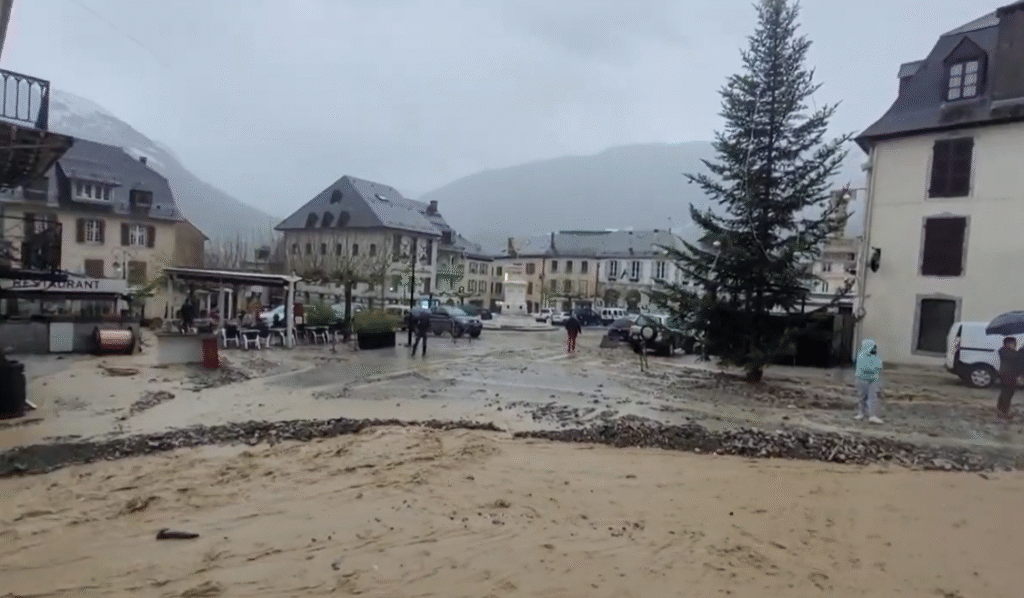
Creative Solutions: Simulating Flash Flood Management with Water Squares
To illustrate the analysis of urban metabolism influenced by anthropogenic interventions, an academic study was developed under the guidance of the Didactic Laboratory of Phenomenology of Architecture and the NatureCityLAB Research Laboratory of Basilicata University. This work focuses on the phenomenon of «flash floods,» increasingly frequent in Europe and directly associated with climate change. As part of this study, the concept of «Water Squares» was proposed as a participatory tool to simulate and analyze how flash floods can be managed.
These multifunctional spaces are designed to collect rainwater during intense storms, mitigating the impact of floods, while also serving as vibrant public spaces during dry periods. This approach highlights the importance of integrating collaborative strategies and involving key stakeholders in addressing urban resilience and sustainability challenges.

Insights from Matera: Lessons from a Neolithic Settlement
Matera, a UNESCO World Heritage Site, stands out for its innovative and sustainable water management system, rooted in its historical and environmental context. The city’s ancient cistern system, designed to collect and gradually release rainwater, exemplifies a remarkable integration of architecture and urban metabolism. This system responded to critical challenges: the need to store water resources in a region lacking natural waterways, the protection of hypogean (subterranean) architectural models against rainfall damage, and the regulation of humidity and ventilation to ensure internal comfort. The latter was achieved through the properties of local materials, such as «calcarenite Gravina,» a porous stone that plays a crucial role in maintaining thermal balance.
Matera’s example underscores how historical ingenuity can inform modern approaches to urban sustainability, particularly in integrating water management systems that address both environmental and architectural needs.
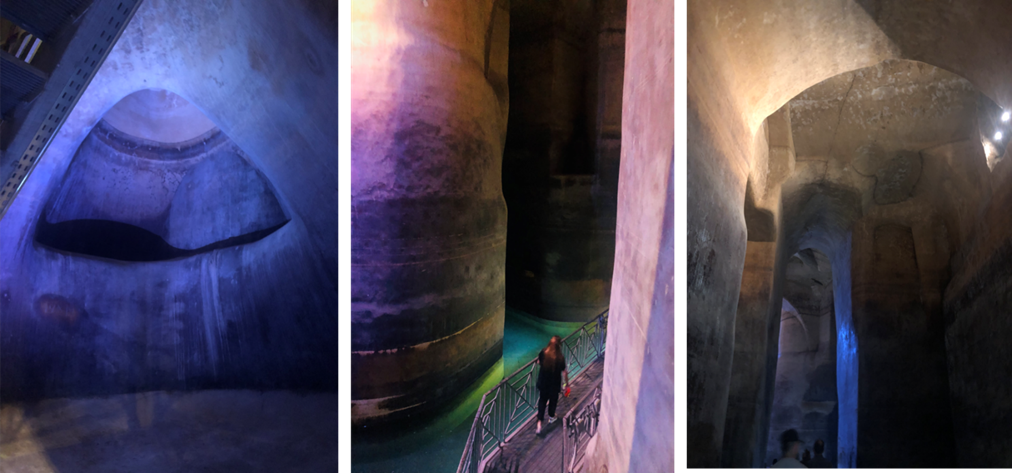
Reflection: Timeless Innovation in Urban Water Management
Both the «Water Squares» proposed by NatureCityLAB Research and the ancient cistern system of Matera, known as Palombaro Lungo, share a common objective: managing water flows to address environmental and urban challenges. Despite being developed in vastly different eras, these solutions highlight the universal need for effective water management in urban contexts. The Water Squares represent a contemporary approach, using multifunctional public spaces to mitigate flash floods while fostering community engagement. In contrast, the Palombaro Lungo system, developed centuries ago, exemplifies how ancient settlements ingeniously addressed water scarcity and environmental risks by integrating architectural design with hydrological management. Both techniques demonstrate how urban innovation transcends time, adapting to the specific needs of each period. By managing water inflows and outflows, these systems enhance urban resilience and sustainability. The comparison serves as a reminder that leveraging historical ingenuity can inspire modern solutions, bridging past and present in the pursuit of sustainable urban development.
Call to Action
Urban metabolism provides a powerful lens to understand and address the challenges of water management in cities. Whether it’s the multifunctionality of the Water Squares, presented as an academic concept developed by the NatureCityLab at the University of Basilicata, or the ancient cistern system of Palombaro Lungo in Matera, both demonstrate how managing water flows—input and output—can enhance urban resilience and sustainability. These examples highlight the potential of innovative and context-sensitive approaches to address critical urban challenges.
I invite you to reflect:
- How does the concept of urban metabolism apply to water management in your city?
- Are there traditional or modern solutions in your community that align with these principles?
Let’s discuss how we can integrate the lessons from these examples into our shared vision for more sustainable and innovative cities. Your insights can help shape a deeper understanding of urban metabolism in practice. Share your thoughts below!
#UrbanMetabolism #SustainableCities #ResilientUrbanism #WaterManagement #UrbanInnovation #ClimateAdaptation #GreenInfrastructure #NaturalDisasters #Novamanto #SustainableDevelopment #ClimateChange