
Permeable by Design Turning Urban Soil into Climate Infrastructure
Climate change poses urgent challenges for cities: extreme rainfall, flooding, heatwaves, and the pressing need to reduce emissions. In this context, Malmö (Sweden) and Copenhagen (Denmark) have emerged as global references in climate-responsive urbanism, implementing innovative strategies that combine mitigation, adaptation, and high-quality public space. From water-resilient neighborhoods to a deeply rooted cycling culture, both cities offer tangible and transferable approaches.
This newsletter series will explore four key urban strategies observed during my visit to both cities:
- Permeable surfaces and soil management
- Water as operational infrastructure
- Green spaces and urban comfort
- Bicycles as arteries of urban metabolism
Each edition will unpack one of these themes through concrete examples and practical reflections, written in a clear, accessible style for professionals and practitioners seeking inspiration and actionable insights for their own urban contexts.
Over the course of six days of intensive fieldwork, I explored both cities on foot and by bike. A 70 km transect walk, guided by a Malmö resident, allowed me to observe how Nordic urbanism addresses climate challenges at every scale. While southern Europe faces increasingly severe heatwaves, Malmö and Copenhagen demonstrate that it is possible to plan not only for comfort, but for the climate resilience of the built environment.
How Malmö and Copenhagen are redefining ground surfaces to build climate-resilient cities?
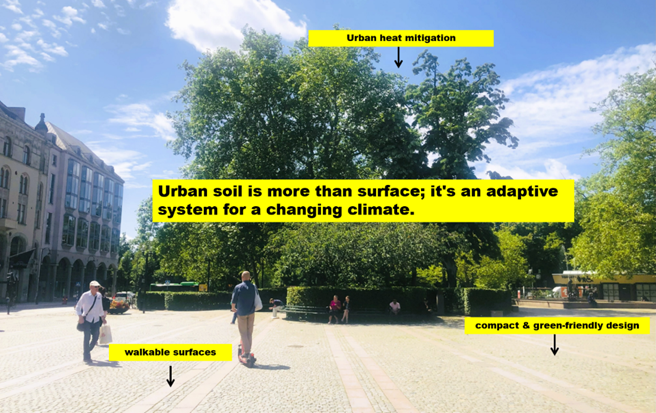
Urban soil is more than just the surface we walk on. In the face of climate change, it becomes a critical system, absorbing rain, reducing runoff, regulating temperature, and hosting biodiversity. Malmö and Copenhagen offer leading examples of how urban ground can be reimagined as living infrastructure.
🧱 Malmö: Regulation and Design for Breathing Soil
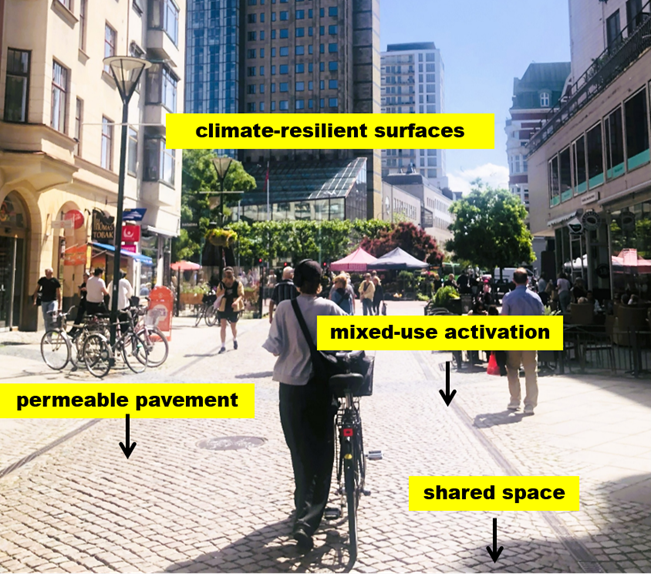
- Introduced the Green Space Factor, requiring at least 50% of surface area in new developments to be permeable (vegetation, natural soil, gravel, etc.).
- Implemented a Green Points System that mandates the inclusion of biodiversity and natural ground features in each project (green roofs and walls, ponds, vegetated courtyards, and bird nesting boxes).
- In the Bo01 district, 50% of the ground is dedicated to open spaces, many of them permeable, proving that high density does not mean full concrete coverage.
- The message is clear: urban soil must be regenerated with sponge-like criteria, even in former industrial areas.
🏙️ Copenhagen: Reversing Impermeabilization
- Since 2010, all major new buildings are legally required to include green roofs, adding around 5,000 m² of green rooftops each year.
- Converted parking areas and paved squares into permeable green zones (Østerbro and Tåsinge Plads).
- Innovated with drainage-integrated pavements like the, combining micro-drainage and urban design.
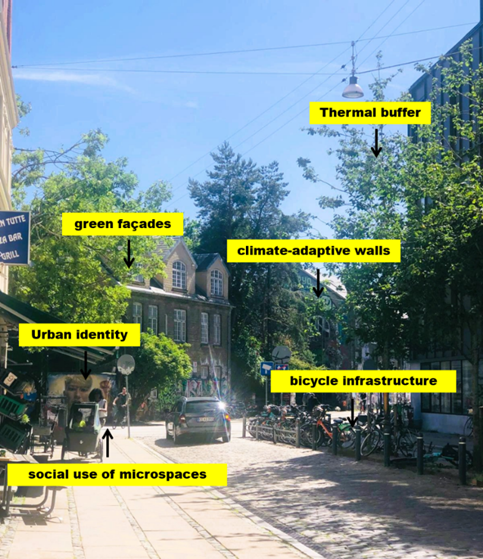
- Beyond traditional parks, streets, plazas, and sidewalks are reimagined as active absorptive surfaces.
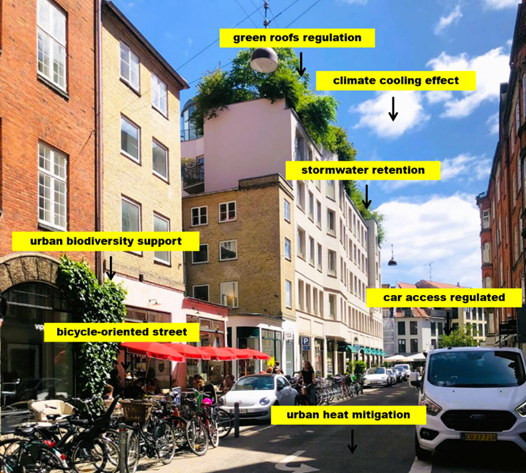
💧 Green roofs absorb a significant portion of rainwater (up to ~80% during regular events), while also insulating buildings, reducing energy consumption and enhancing urban habitat quality.
💡 Key Lesson for Other Cities
Plan the ground as an urban operating system. Introduce regulations, design strategies, and materials that promote water infiltration, increase biodiversity, and reduce surface runoff.
🌿 Green infrastructure starts from the ground.
Soil is often overlooked in urban design,treated as a neutral background rather than an active player. Yet Malmö and Copenhagen show that when urban ground is planned as a living system, it becomes one of the most effective tools for climate adaptation, ecological health, and urban wellbeing.
By turning impermeable surfaces into infiltration layers, and by embedding biodiversity and vegetated systems into the urban fabric, both cities have built the foundations of what could be called climate-active soil.
The lesson is clear:
Climate resilience starts beneath our feet.
Future-ready cities will need to move beyond cosmetic greening and adopt soil regeneration as a systemic, regulated practice across urban planning, building codes, and landscape design. Whether in the Global North or South, the transition to permeable, adaptive, and biodiverse surfaces is not just desirable, it is necessary.
This is the groundwork for urban futures that breathe, absorb, and adapt.
→ Read next: Urban Water as Infrastructure